The lotus root is the root portion of the lotus plant.
The plant grows in ponds with the flowers, stems and leaves above the water and the root below the water.
Every part of the plant can be used in cooking, either as ingredients or as cooking tools. The flowers, stamens, seeds, leaves and of course the roots or more commonly known as rhizomes.
The root is light grey brownish in color. When cut in cross-section, it looks like wheels or some say snowflakes.
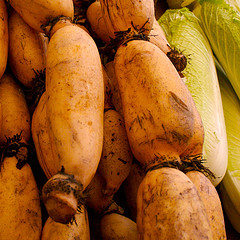
Photo source: yewenyi on flickr
This starchy rhizome appears frequently in chinese food, especially vegetarian dishes. It not only adds bulk but also can help balance the oiliness and richness of fatty cuts. It is crunchy even after long hours of cooking and it does not have a strong flavour.
This asian vegetable can be used raw in salads, stir fries, deep fried as tempura or chips, and of course in chinese soups.
To make lotus root chips, peel and slice them thinly. You can do so by hand although I think a mandoline is much better for consistent slicing especially if you aren't that great with a knife. Pat dry with kitchen towel and deep fry. A much healthier munchies than potato chips.The root can also be juiced raw together with radish to make a vegetable juice mix that help to alleviate internal bleeding in the stomach.
How to select, clean and prepare
The lotus plant is in full bloom in summer. The roots are typically harvested from autumn to winter.
The fresh root is harvested from ponds, so they are usually covered in mud. That's one of the ways we tell the fresh ones from the not so fresh ones. Wash and scrub thoroughly to remove the mud.
Besides muddy ones, choose those that are fairly straight and each section is regularly shaped. There shouldn't be any bruising or cuts. Avoid those that look dry or too white.
Grandma will usually peel the outer skin with a peeler before slicing them cross-section. I personally don't think peeling is necessary. A good scrub is a must though.
If you are not going to use it immediately, soak in water with lemon juice or rice vinegar to prevent discoloration after peeling and cutting.
Avoid using metal pots and pans as it causes the roots to turn black. That is not good.
Storage tips
Uncut and unwashed roots can be wrapped in newspaper and cling wrap before placing in the refrigerator. Sliced lotus root should be wrapped in cling wrap before placing in the refrigerator. Consume within 2 days.
Recipes
Try these:
- lotus root soups
- Lotus root recipes
Search for soup recipes: