
7 Chinese Hot and Sour Soup Recipes
7 Chinese hot and sour soup recipes and 5 cooking tips to a delicious sour, spicy and savory soup.
The Chinese hot and sour soup is a common homemade soup from the 四川 (si chuan) province in China. It became popular because it is a winner on all fronts.
- It has complex taste; sour, spicy and savory all at the same time.
- It has interesting texture; smooth, slightly thickened and crunchy
- It has a winning look; colourful with a tinge of gloss.
It makes a great appetizer as the palate is stimulated or awakened by its spiciness and tartness. It warms the stomach and preps the palate for the food coming after. In a chinese banquet, a variation of a hot and sour soup is usually served as the first dish or second dish.
The slightly thickened consistency adds to its charm. It also helps cut down the greasiness of a meal and aids digestion.
You may have never tried making hot and sour soup because you thought it looks difficult. Or you have tried but it tasted bland. It is actually not difficult to wow your palate and those belonging to friends and family with this soup.
- Hot and sour soup with soft tofu, chicken, pork and Chinese mushrooms
- Hot and sour soup with pork, bamboo shoot and enoki mushrooms
- Hot and sour soup with pork, black fungus, carrot and bamboo shoot
- Hot and sour soup with pork, black fungus, carrot & celery
- Hot and sour soup with black fungus, shiitake mushrooms, bamboo shoot and tiger lily buds
- Chinese hot and sour soup with tomato, preserved vegetable and soft tofu
- Vegetarian hot and sour soup
5 Cooking Secrets
I am going to let you in on a few tips on how to make this delicious pot of soup:
1. Use a soup stock
Do not use plain water to make hot and sour soup. To those who cook often, this might not seem like a secret. But I have come across so many friends who did not know that they should use a soup stock until I told them.
If only water is used, there isn't enough time for the ingredients to impart any flavor to the soup. This is the major cause of soup blandness.
You can make a chicken or vegetable stock from scratch or buy ready-made ones or use stock cubes.
2. Use natural vinegar
Do not use cheap white vinegar to make this soup. This is from personal experience. I tried it once when I was still a poor student and budget-conscious. I did not know that the cheap white vinegar sold in supermarkets is not made from natural ingredients.
Rice vinegar is preferred and I like the dark ones because it adds a tinge of sweetness and has a more earthy tone.
Do not add the vinegar too early in the cooking process. Overcooking dulls the sharpness of the vinegar. Best to add it last.
3. Thicken soup first before egg drop
Many hot and sour soups have beaten egg in them. The sequence of adding the beaten egg is important. Soup thickening requires constant stirring to prevent lumping. If beaten egg was added first, you wouldn't be able to create visible streaks. It would be too broken and also overcooked.
To create nice egg streaks, guide the egg into the soup with a fork or a pair of chopsticks instead of pouring free hand. You can stream the egg in a circular motion over the soup. Let it stand for a while to set. Then, gently stir the soup to create the streaks.
You do not have to maintain a constant stream of beaten egg. You can stop pouring or streaming. Some people add the egg one spoonful at a time. Do that if you want more control but it is a tad slow. :P
4. Thickening is an art
Hot and sour soup is frequently thickened with cornstarch. There is no exact amount. Add the cornstarch mixture until the soup reaches your desired consistency. If in doubt, add less and check. It is easier to add more cornstarch mixture to soup.
Cornstarch mixture is made by adding equal amount of cornstarch to cold or room temperature water and stirring quickly to combine them. Cornstarch do not dissolve in the water. If left to stand for too long, the cornstarch will settle to the bottom of the mixture. A lot of cooks prepare the cornstarch mixture just before needing them. Or remember to give it a quick stir before adding to your hot soup.
Another name for cornstarch mixture is cornstarch slurry.
5. Cut ingredients into similar sizes
Almost all the ingredients in a chinese hot and sour soup require a fair bit of cutting like shredding and dicing. Use the mandoline if necessary. The beauty of this soup is that you can taste all the different ingredients in one spoonful.
7 Hot and Sour Soup Recipes
This type of soup can be simple or complicated. It can be basic or extravagant. It all depends on the ingredients used. Common ingredients include tofu, pork or chicken, bamboo shoot, carrot and egg.
Let's start cooking with a fairly straightforward recipe with ingredients that can be found easily.
1. Soft tofu, chicken, pork and Chinese mushrooms
Ingredients
- 30g soft tofu
- 15g chicken breast
- 15g lean pork
- 15g fresh Chinese mushrooms
- 1 egg, beaten
- 25g cornstarch
- 500ml chicken broth
Seasonings
- 1.5 tbsp ground white pepper
- 2 tbsp soy sauce
- 1 tbsp rice vinegar
Garnish
- 3g chopped spring onion
- Dash of sesame oil
Directions
- Slice the tofu and mushrooms into thin strips
- Cook the chicken breast and lean pork and tear into shreds
- Bring the chicken broth to a boil in a pot
- Add the mushrooms, chicken breast, lean pork and tofu
- Add the soy sauce to taste
- Bring the soup back to a gentle simmer
- Place the cornstarch into a small bowl and add enough water to dissolve the cornstarch
- Add the cornstarch mixture to the soup to thicken the soup. Add the mixture slowly until you reach the desired consistency
- Using a pair of chopstick, guide the beaten egg into the soup
- Place the pepper and rice vinegar into the serving bowl
- Pour the soup into the serving bowl and combine the seasonings and soup well
- Sprinkle the sesame seed oil and spring onion before serving
Besides Chinese mushrooms, other types of mushrooms / fungus are quite common in the Chinese hot and sour soup. Shiitake mushrooms, enoki mushrooms and black fungus.
Shiitake mushroom is meaty while enoki offers a soft crunch. I like chewing on enoki mushrooms because each bite releases flavorsome juices.
Enoki is my favourite. It can be used in stir-fries, barbeque and because they are already of the correct size. Just need to trim off the roots and cut them into half. *wink*
2. Pork, bamboo shoot and enoki mushrooms
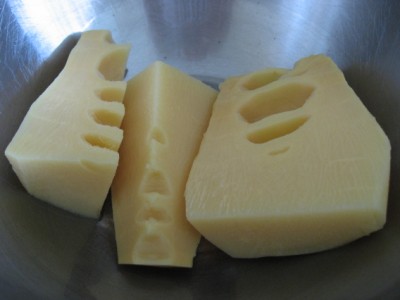
The combination of bamboo shoot, carrot, Chinese mushrooms and enoki mushrooms in thin strips in a slightly thickened soup is a classic texture.
Ingredients
- 250g lean pork
- 150g bamboo shoot
- 50g carrot
- 6 dried Chinese mushrooms
- 50g enoki mushrooms
- 1 stalk Chinese celery
- 6 cups soup stock
- Salt and ground white pepper
- 2 tbsp cornstarch solution
- 1 tbsp sesame seed oil
- 1 tbsp black vinegar
Directions
- Wash the pork and slice into thin strips
- Peel the carrot and bamboo shoot and slice into thin strips
- Soak the dried Chinese mushrooms until softened, remove the stalks and slice into thin strips
- Trim off the ends or root of the enoki mushrooms and rinse in salt water. Cut into half if they are too long
- Bring the soup to a boil in a pot
- Add the bamboo shoot, Chinese mushrooms, enoki mushrooms, and carrot and bring back to a boil
- Add the pork slices
- Lower the heat and simmer until the carrot and bamboo shoots are cooked and soft
- Add salt and pepper to taste
- Thicken the soup slightly with the cornstarch solution
- Wash and finely chop the Chinese celery
- Garnish the soup with Chinese celery and black vinegar before serving
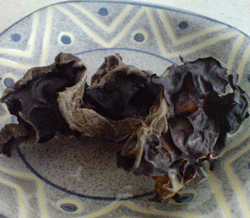
Black fungus is also known as wood ear, Judas or tree ear fungus. As the name suggests, it is a fungus that grows on trees. Some may think this is a exotic or bizarre food. But try it anyway. It is good for the heart, blood cholesterol and digestion.
3. Pork, black fungus, carrot and bamboo shoot
Ingredients
- 100g pork tenderloin
- 20g black fungus or wood ear
- 30g carrot
- 30g bamboo shoot
- 2 slices ginger
- 1 stalk spring onion
- 2 eggs
- 2 tbsp cooking oil
- Salt and ground white pepper
- 1 tbsp soy sauce
- 6 cups soup stock
- 2 tbsp cornstarch mixture
- 1 tbsp dark vinegar or balsamic vinegar
Try to find young fresh bamboo shoot. The canned version is also okay. Avoid the ones that are soaked in oil. Dark or balsamic vinegar has a rather earthy tone which matches the texture of the black fungus and bamboo shoot.
Directions
- Wash and soak the black fungus for about 1 hour in room temperature water until rehydrated
- Slice the rehydrated fungus into long thin strips
- Wash the pork tenderloin slice into long thin strips
- Peel, wash and shred the carrot and bamboo shoot
- Blanch the carrot and bamboo in boiling water and drain
- Slice both carrot and bamboo into long thin strips or use a mandoline to shred them
- Wash the ginger and spring onion and chop both finely
- Beat the eggs lightly
- Heat the cooking oil in a wok
- Stir fry the spring onion and ginger until slightly aromatic
- Then add the pork, black fungus, carrot and bamboo shoot
- Fry them thoroughly
- Add the soup stock, soy sauce, salt and pepper
- Bring to a boil
- Add the cornstarch mixture and stir to thicken the soup slightly
- Remove from the heat, stream the beaten egg and stir the soup gently
- Drizzle the black vinegar before serving
4. Pork, black fungus, carrot and celery
Instead of bamboo shoot, this recipe has celery.
Ingredients
- 100g lean pork
- 20g black fungus
- 2 pieces ginger
- 30g carrot
- 30g celery
- 2 eggs, beaten
- 6 cups soup stock
- 2 tbsp cornstarch mixture
- 2 tbsp cooking oil
- Salt and ground white pepper to taste
- 1 tbsp rice vinegar
Garnish
- 1 stalk spring onion, chopped
- 2 stalks coriander, chopped
Directions
- Soak the black fungus until soft
- Wash the lean pork, black fungus, carrot and celery, coriander and ginger
- Slice the pork, black fungus, carrot and celery into thin strips
- Chop the coriander and ginger finely
- Bring a pot of water to a boil and parboil the pork, fungus, carrot and celery for about 5 minutes
- Drain and leave aside
- Heat the cooking oil in a pot and fry the ginger till brown
- Add the pork, black fungus, carrot and celery and fry quickly
- Add the soup stock and bring to a boil
- Add the salt and pepper to taste
- Thicken the soup with the cornstarch mixture to the desired consistency
- Remove from heat and stream the beaten egg in using a pair of chopsticks
- Place the rice vinegar into the serving bowl and pour the soup over it
- Give it a quick stir
- Garnish with the chopped spring onion and coriander
- Serve
5. Black fungus, shiitake mushrooms, bamboo shoot and tiger lily buds
Ingredients
- 4 cups of vegetarian soup stock
- 25g bamboo shoot
- 100g soft tofu
- 25g dried shiitake mushrooms
- 25g black fungus or wood ear
- 25g dried tiger lily buds or golden needles 金针花干 (jin zhen hua)
- 2.5 tbsp cooking oil
- 2 tbsp cornstarch mixture
- 10g coriander leaves
This is a vegetarian soup, but even without meat, it is luxurious. Dried shiitake mushrooms and tiger lily buds have a comforting smoky and earthly flavor.
Seasonings
- 1 tbsp soy sauce
- 1.5 tbsp rice vinegar
- Ground white pepper
Directions
- Wash and boil the bamboo shoot if it is fresh. Skip this step if you are using canned bamboo shoot
- Soak the dried mushrooms and black fungus in warm water until soft
- Cut the bamboo shoot, mushrooms and black fungus into thin strips
- Wash and soak the dried lily buds
- Cut the soft tofu into thin slices
- Chop the coriander finely
- Heat the cooking oil in a pot
- Add the bamboo shoot and fry quickly
- Add the soup stock
- Add the lily buds, black fungus, and tofu
- Bring to a boil
- Add soy sauce and test the taste
- Thicken the soup with the cornstarch mixture until the desired consistency
- Place the rice vinegar and pepper into the serving bowl and mix well
- Pour the soup into the serving bowl
- Garnish with chopped coriander and serve
The recipes so far have used only vinegar to flavor the soup. The next recipe uses tomato and spicy preserved vegetable to add a tartness different from vinegar. This makes the soup a bit more complex and interesting.
6. Tomato, preserved vegetable and soft tofu
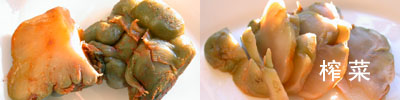

Picture of the zha cai/preserved vegetable
Ingredients
- 3 cups of water or soup stock
- 1/5 piece soft tofu
- 5 small pieces black fungus
- 50g lean pork
- 30g preserved spicy vegetable / 榨菜 (zha cai)
- 1 slice ginger
- 1 egg, beaten
- 1 small tomato
- 1 tbsp cornstarch
- 2 tbsp cornstarch mixture
- Cooking oil
- 1 stalk spring onion
Seasonings
- 2 tbsp black vinegar
- 1 tsp salt
- 1 tbsp sugar
- 1/5 tsp soy sauce
- 1 tbsp preserved bean paste 豆瓣酱 (dou ban jiang)
- Ground white pepper
- Cooking wine
The preserved vegetable used here is known as 榨菜 (zha cai) in mandarin. It is actually made from a thick knobby stemmed mustard. The part that is eaten is the stem part. It can be very salty and spicy so it is normally sliced thinly or into strips.
Use a fresh firm tomato. To peel the tomato, score the skin with a sharp knife and then blanch quickly in hot water. The skin will contract and curl away from the flesh.
I usually do not remove the tomato seeds but add them to the hot and sour soup. It is up to you. I suggest removing only if you really do not like them or if you are serving the soup to the elderly or people with digestive issues.
Directions
- Clean and slice the lean pork into thin strips
- Marinate with wine, salt and cornstarch
- Soak the black fungus till soft
- Cut the black fungus, preserved vegetable, spring onion and ginger into thin strips
- Peel the tomato, remove seeds and slice into thin strips
- Cut the tofu into thin strips
- Combine the dark vinegar, soy sauce and pepper
- Heat the oil in a pot
- Add the preserved bean paste and fry quickly
- Add the lean pork strips and fry briefly
- Remove the pork strips and leave aside
- Add the soup stock into the pot and add the ginger, black fungus strips
- Bring the soup to a boil
- Add the tofu, preserved vegetable, pork strips and tomato
- Add the combined vinegar, soy sauce and pepper
- Bring the soup back to a boil
- Thicken soup with the cornstarch mixture
- Stream the egg in, using a pair of chopstick
- Remove from heat, garnish with chopped spring onion
- Serve hot
7. Vegetarian hot and sour soup
This is the final recipe and it is a vegetarian one.
It contains a bizarre ingredient - 发菜 (fa cai). It is a type of edible hair-like moss. Once it is cooked, it softens and clings to the surface of other ingredients. It has the same sound as prosperity in mandarin which is why the Chinese likes to use it in our new year dishes.
The other new ingredient is salted vegetable 咸菜 (xian cai). This is a type of preserved vegetable but not the preserved vegetable introduced earlier on. This one consists mostly of the leaves of the vegetables and is preserved with salt.
Ingredients
- 5g 发菜 (fa cai)
- 110g needle mushroom (enoki mushrooms)
- 4 shiitake mushrooms, sliced thinly
- 85g 咸菜 salted vegetable, cut into thin strips
- 1 firm tofu, cut into thin strips
- 1 carrot, cut into strips
- 3-4 red chilli, remove seeds and sliced
- 85g vegetable cooking oil
- 1 litre vegetarian soup stock
- cornstarch mixture (2 tbsp with 60ml water)
- 1 egg, beaten
Seasoning A
- 1 tbsp soy sauce
- 1 1/2 tsp salt
- 1/2 tsp ground white pepper
Seasoning B
- 60ml dark vinegar
- 1 tbsp rice vinegar
- 2 tsp sesame seed oil
- 1 tbsp chopped coriander
Seasoning B should be added just before serving. You can set them on the dining table and allow your guests to add them on their own.
Directions
- Soak the salted vegetable in water for 30 minutes, drain, wash and cut into thin strips
- Soak the black moss in water for 20 minutes and drain
- Heat the oil in a wok, fry the shiitake mushrooms for about a minute
- Add the tofu, carrot, salted vegetable, chilli, fa cai and enoki mushrooms
- Stir fry the ingredients well, add the soup stock and seasoning A
- When soup boils, lower heat and simmer for 2 minutes
- Add the cornstarch mixture and bring soup back to a boil and thickens
- Turn off the heat, add the beaten egg
- Before serving, add seasoning B
Quick and easy
Making Chinese hot and sour soup from scratch is great but are there times when you just aren't up to cooking yet crave the comfort of a hot and sour soup?
Or you are not up to stocking your larder with too many Chinese condiments. Or worse! You ran out! May I recommend stocking up the following:
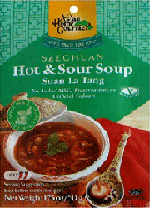
This pre-packed soup mix is really easy to use. There are instructions on the back of the packet. It comes in 50g vacuum-packed pouch. No added monosodium glutamate, preservatives and artificial colors. The sodium is a bit high which is quite normal for processed food items. As long as you eat in moderation, I think it is handy to have a small stash of this soup packs in your larder for rainy days.
Happy Souping, Phoebe

Homemade Chinese Soups by Phoebe Lim Choon Lan is licensed under a Creative Commons Attribution 4.0 International License.
Privacy Policy | Disclosure and Disclaimer
This site is powered by SBI and has been live since 2006


