Noodle soups are quinessential chinese food.
I think nobody will dispute the claim that the Chinese invented noodles.
The creative manipulation of different grains milled into flour and turned into long strings, strips, thin or thick or squares and all sorts of shapes.
There are so many types of noodles around that if I were to try 1 type a day, it might take me months to complete the entire range.
Noodles can be served dried, semi-dried or in soups. It can be served hot or cold.
Let us take a look at some varieties:
Dried wheat noodles
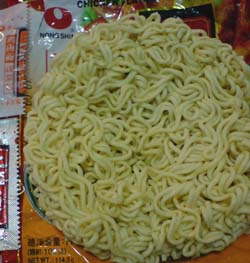
Sounds familiar?
Yup, the instant noodles.
Although they are sold as they are without the usual flavourings. Southern chinese like to add egg to the noodles to produce dried egg noodles.
Flour Vermicelli
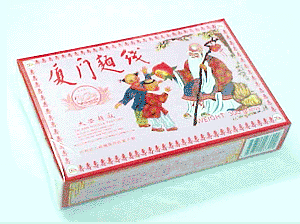

Another type of dried wheat noodle is the flour vermicelli (also known as mian xian in mandarin). Mian xian literally means wheat threads.
This is a very very thin noodle. It is one of my favorite noodles as I like the soft smooth silky texture. It is almost always served as thickened soup because the noodles themselves is starchy. Leave a bowl of mian xian soup for a while and the mian xian will expand and turn the soup thick. Love it!
Egg noodles
This has thicker strands than the dried version and is usually sold fresh. Parboil before serving with soup or add to the wok for frying.
Found fame in "cha gua tiao" and fried dark hokkien noodles. One of the most famous hawker food in Singapore. It is also found in the fried prawn noodles and Singapore noodles.
Rice noodles
This is made from rice flour and are available in broad sheets, round threads, or vermicelli (like angel hair pasta). It is usually sold dried. It has a translucent appearance and will turn white when cooked.
The broad sheets is known as gou tiao in mandarin, great in fishball soup. The vermicelli is known as mi fen in mandarin. More commonly use for fried bee hoon or chao mi fen in mandarin. It is great in soups too.
Mung bean vermicelli

Known as fen si in mandarin or bean threads, this noodle is made from mung beans. The chinese has only one version, a thread-like mass sold dried. It needs to be parboiled or soaked to soften it before use. I like mung bean vermicelli in hot soups but I also like it in Vietnamese spring rolls and cold salads. Grandma also likes to stir-fry it with mixed vegetables.
The Koreans are more creative with mung bean noodles. A visit to a korean supermarket at Square2 and I discover the flat version and the thick version. They are also more springy than the local ones.
Japanese noodles
Ramen
Ramen is the name of the famous japanese noodles. Made from wheat flour, egg and water. Almost always found in hot soups. There are both fresh and dried versions.
Many instant noodles call themselves ramen but they are a far cry from the real thing. The texture is different. If you think that ramen equals instant noodle, I would suggest you pay Ajisen a visit and try their ramen. They are really good and value for money.
Somen
This is a very fine and thin Japanese wheat flour noodles which can be used in stir fried or noodle soups. I seldom come across noodle soup recipes using somen though.
Fresh soba
Soba is made from highly nutritious buckwheat together with plain flour. It is thicker and has a chewy quality. It is good in hot soups or as a cold dish. They are either green or brown in color. Again, can be dried or fresh.
Udon
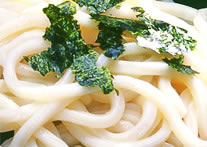
However, localisation has seen it being used in stir-fries.
Still yummy although chefs must take care not to overcook the noodles. They can become a goofy mess.
Recipes for noodle soups
Try these noodle soups recipes.
Search for soup recipes: