Poria Fungus Fit For a Queen
Home > Chinese herbs > Poria fungus
Poria fungus has always been regarded as a nourishing food by the Chinese. This article covered some of its medicinal uses, interesting stories and 10 poria fungus recipes.
According to legend, the infamous Empress Dowager 慈禧 (Ci Xi) of the Qing Dynasty used to suffer from weak health and a poor appetite. The imperial chefs made it a point to use medicinal herbs that could invigorate the spleen and promote appetite in their cooking. They discovered poria and made thin crepes or filled pancakes with finely ground poria powder, adding other ingredients like fine flour, pine nuts, peach kernels, sweet osmanthus flowers and honey. The Empress Dowager loved these poria pastry so much that she used them as a form of reward for court officials.

Sweet poria cakes. Recipe below
For those unfamiliar with modern Chinese history, Empress Dowager 慈禧 (Ci Xi) ruled China for a better half of the 19th century because her son, Emperor 同治 (Tong Zhi) and the subsequent Emperor 光绪 (Guang Xu) ascended the throne when they were very young. This period was commonly referred to as 垂帘听政 (chui lian ting zheng). Translated literally as Ruling behind the curtains. She was resistant to reforms and did not hesitate to squash and kill the opposition. No wonder she had weak nerves.
On a more poetic and literary note, poria is mentioned in one of the most well-known classical literary works in China, A Dream of Red Mansions, 红楼梦 (hong lou meng) as a health and beauty product. Poria cream, mentioned in chapter 60 is mixed with milk or boiled water and drank every morning to promote good health. The cream is also used as a facial mask by the female characters in the story to achieve beautiful white and smooth complexion.
What is Poria or Fu Ling?
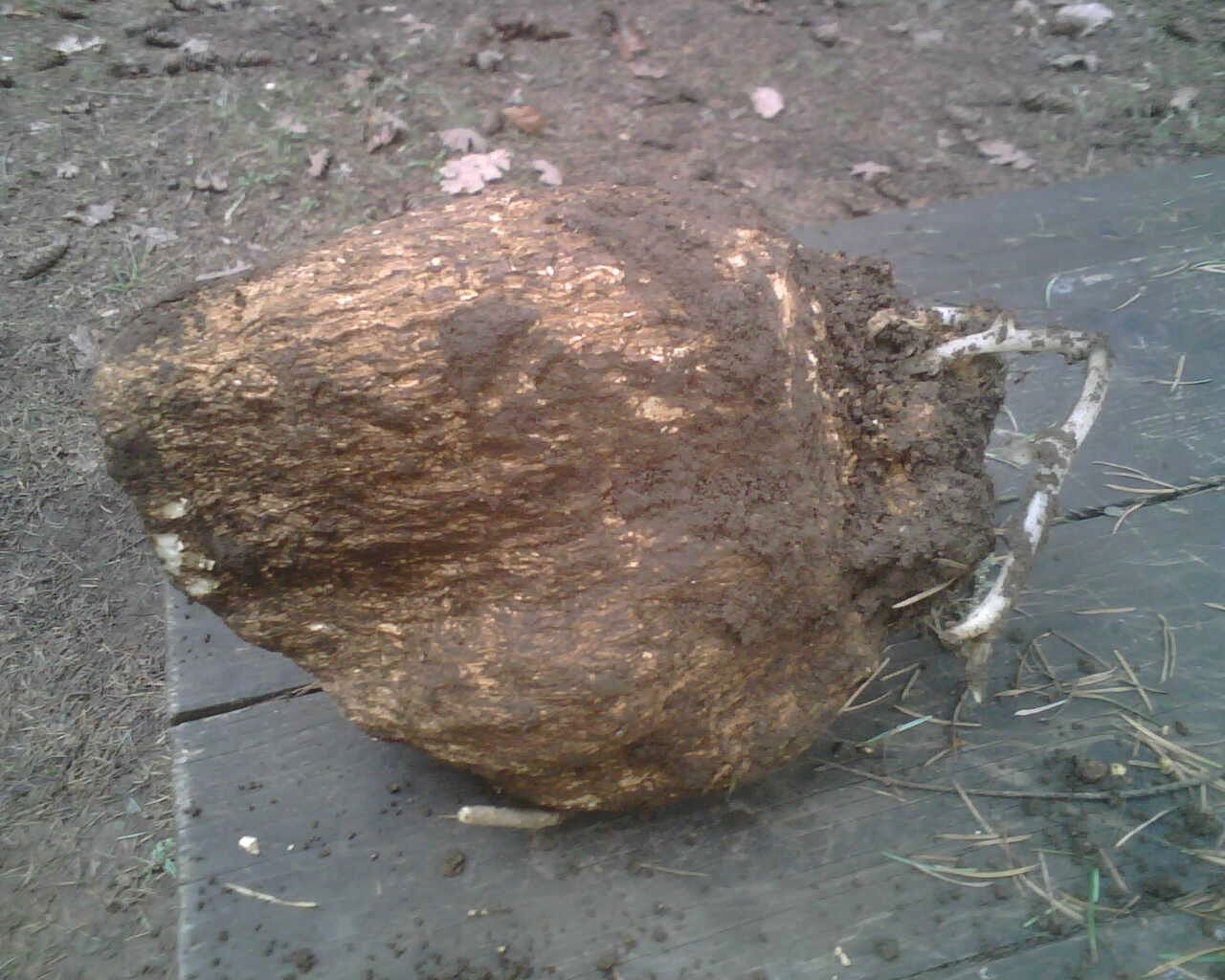
By Trappem at English Wikipedia - Transferred from en.wikipedia to Commons., Public Domain, https://commons.wikimedia.org/w/index.php?curid=15773909
茯苓 (fu ling) or poria is derived from poria cocos which is a type of fungus that thrives on the roots of the masson pine tree or the Japanese red pine. It is shaped like a sweet potato with a brownish-black skin and white or pink flesh.
Poria is usually sold as dried white or pink slices and in this form it is known as 茯苓 (fu ling) in Chinese.
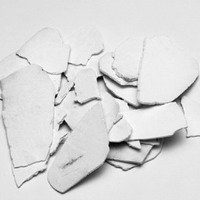
Poria fungus is also mentioned in traditional chinese medicine. It is considered neutral in nature with both a sweet and light flavour. It invigorates the spleen, promote diuresis and tranquilises the mind.
Poria fungus contains a large amount of polysaccharide substances which helps to regulate the functions of the immune system. It is good for the elderly and patients with a weak constitution or suffering from chronic illnesses.
10 Poria Fungus Recipes
I have 10 recipes here featuring poria as a key ingredient. Try them and let me know how you like them.
1. Cream of poria
This can be included as a dessert in the diet of a patient weakened by chronic illnesses.
Ingredients
- 100g poria fungus
- 50g fresh milk
- Honey to taste
Directions
- Steep the white poria in cold water for 2 hours
- Steam for 30 minutes
- Slice the steamed poria and place in a blender with the milk
- Blend until the poria is completely dissolved and the mixture has no grainy texture
- Place the blended poria in a pot and bring to a boil
- Add honey and stir well
2. Herbal remedy for good skin
This is an infusion of fu ling and chrysanthemum flowers. More like a tea.
Ingredients
- 15g fuling
- 5g dried chrysanthemum flowers
- 500cc water
Directions
- Rinse the chrysanthemum flowers and fu ling
- Place the fu ling in a pot and add the 500cc water
- Bring the water to a boil and lower the heat to simmer for 45 minutes
- Add the chrysanthemum flowers
- Cover the pot and let stand for 5 minutes
- Serve
Directions using a thermal flask
- Place the fu ling and chrysanthemun flowers in a thermal flask
- Add boiling water and cover the flask
- Let stand for 1 hour
- Serve
3. Fuling tonic soup
This is a tonic soup suitable for everyone, especially during the winter months.
Ingredients
- 15g poria fungus
- 15g chinese yam
- 15g dried longan
- 15g solomon seal
- 10g lotus seeds
- 10g euryale seeds
- 200-300g lean pork
- salt to taste
- 1 litre water
Directions
- Wash the lean meat and chop into pieces and parboil
- Wash the medicinal herbs, put them in a earthern pot and soak in cold water for 30-60 minutes
- Add the water and bring to a boil
- Next, add the lean meat and simmer over low heat for 1 hour
- Add salt to taste
The next 5 are congee or rice porridge recipes.
4. Poria and lily bulb porridge
This is a healthy rice porridge suitable for patients with weak spleen functions, insomnia or obesity brought on by chronic illnesses.
Ingredients
- 15g poria fungus
- 15 lily bulbs
- 50g white rice
Directions
- Grind the indian bread into powder and set aside
- Wash the lily bulbs and rice, then soak them in a pot of cold water for 30 minutes
- Add an appropriate amount of water to the pot.
- Put the indian bread (powder) in the pot and bring to a boil
- Simmer over low heat until the porridge is cooked.
5. Poria and codonopsis root congee
This is a rice porridge for patients with feelings of general weakness and fatigue, poor appetite, stomach reflux or vomiting and loose stools.
Ingredients
- 15g codonopsis root
- 15g poria fungus
- 100g white rice
- fresh ginger to taste
Directions
- Grind the poria into powder form
- Slice the fresh ginger
- Wash the rice and soak the codonopsis root in a pot of cold water for 30-60 minutes
- Put the poria powder and fresh ginger slices in the pot
- Add an appropriate amount of water and bring to a boil
- Simmer over low heat to make porridge
- When the porridge is ready, remove the codonopsis root and serve
6. Poria and red date congee
This is a suitable rice recipe for patients suffering from palpitation and restlessness, dizziness and fatigue brought on by chronic illnesses.
Ingredients
- 15g poria fungus
- 10-20 pitted red dates
- 50g white rice
- brown sugar to taste
Directions
- Grind the poria into powder
- Wash the pitted red dates and soak them in cold water for 30 minutes
- Wash the rice thoroughly
- Place the rice in a pot together with the red dates (including the water used to soak them) and the Indian bread powder
- Add an appropriate amount of water and cook them together to make porridge.
- When the porridge is cooked, add brown sugar to enhance the taste and serve.
7. poria and euryale seed congee
This is a rice congee recipe for people with weak kidney functions such as urinary incontinence and turbid urine.
Ingredients
- 15g poria fungus
- 15g euryale seed
- 50g white rice
- rock sugar to taste
Directions
- Wash the rice thoroughly
- Grind the euryale seed and indian bread into powder form
- Place the rice and powder into a pot
- Add an appropriate amount of water and cook them together to make porridge
- When the porridge is cooked, add rock sugar to enhance the taste and serve
8. Chicken congee with fu ling and goji berries
I like chicken congee over chicken soup as a comfort food when I am not feeling well. Somehow the rice porridge tastes better than soup. I would use a slow cooker or a good rice cooker to make this congee.
Ingredients
- 1 chicken breast
- 1 cup white rice
- 1 litre soup stock
- 7g fuling
- 2.5g goji berries
- 1 stalk spring onion
- Salt and pepper
- 1 tbsp mirin (Japanese rice wine)
Directions
- Clean the chicken breast and parboil for 2 minutes
- Let it cool down before shredding it
- Wash the spring onion and chop finely
- Wash the rice and place in a big pot together with soup stock, fuling and goji berries
- When the congee is cooked, add the shredded chicken breast and seasonings
- Garnish with chopped spring onion before serving
These last 2 are sweet cake recipes. One is a delicately pressed and steamed. The other one is more like a steamed sponge cake.
9. Sweet poria cakes
Because a visitor asked, I went to look for the recipe for the steamed Fuling cake. It isn't too difficult. It is a fairly delicate snack and you can adjust the amount of fuling powder and sugar when you are making it yourself.
Ingredients
- 1 cup rice flour
- 1 cup glutinous rice flour
- 1/4 cup fuling powder
- 1/4 cup sugar
- 1/2 cup hot water
- 1/4 cup red bean paste
Directions
- Dissolve the sugar in the hot water well to make a thin syrup. Leave it to cool
- Sift the rice flour, glutinous rice flour and fuling powder together
- When the syrup has cooled, add it slowly into the rice mixture
- Sift the entire mixture twice, breaking up any lumps that may have formed
- Divide the mixture into 2 portions
- Line a rectangular loaf tin with parchment paper
- Place one portion of the mixture into the tin, spread evenly, and press lightly
- Add the red bean paste and spread them evenly over the rice mixture
- Add the second portion of rice mixture, spread it out evenly and press lightly
- Bring a pot or wok of water to the boil and place the loaf tin above the water
- Lower to a medium heat and steam it for 20 to 25 minutes.
- When the cake is done, remove from wok and let it cool down before slicing them
10. Steamed poria cakes

This recipe is translated from a Chinese one from this website.
Ingredients
- 15g fuling
- 200g plain flour
- 3g instant yeast
- 3g baking soda
- 20g sugar
- 200g water
- Handful of dried fruits
Directions
- Mill the fuling to powder and sift together with the flour, and baking soda
- Add the instant yeast into the water and let it proof for about 10 minutes
- Add the yeast water into the sifted mixture and mix into a thick batter
- Cover the batter and place it in a warm place to proof for an hour or until it has risen to twice its size
- Oil a large square or rectangular tin and pour the risen batter into it
- Scatter the dried fruits evenly over the top of the batter
- Bring a wok of water to a boil and place the tin over the water to steam for about 25 minutes
Happy Souping, Phoebe
Recent Updates
-
Daikon Radish Recipes from Pickle, Soup, Steam and Pan fried 白萝卜食谱
Oct 10, 21 10:44 AM

Learn how to use the daikon radish in a variety of Chinese daikon radish recipes from pickling, soup, braising, steaming, and pan-frying.
-
Find Bitter Melon Recipes From Soup, Stir Fry, Omelette and Chips 苦瓜食谱
Oct 08, 21 09:24 AM

What is Bitter Melon? Are they really bitter? How do you use bitter melon?
-
Simple Bean Sprout Recipes 豆芽食谱
Oct 04, 21 10:40 PM

Bean sprout recipes for soups, salads and stir-fry, wraps, rolls, omelettes, pancakes and more.


Copyright Statement
I am flattered that people think my content is good enough to re-use. Please follow the instructions on my copyright policy page on how you can repost or re-use. Please do not re-use until you have read my copyright notice.
Pictures appearing on this page are not necessarily mine. Click on the image to the original source.
There are affiliate links on this website. If you use the links to make purchases, I get paid a small amount for the sale - at no extra cost to you. I appreciate the support! [Amazon, Shopee]
Give


Homemade Chinese Soups by Phoebe Lim Choon Lan is licensed under a Creative Commons Attribution 4.0 International License.
Privacy Policy | Disclosure and Disclaimer
This site is powered by SBI and has been live since 2006

